
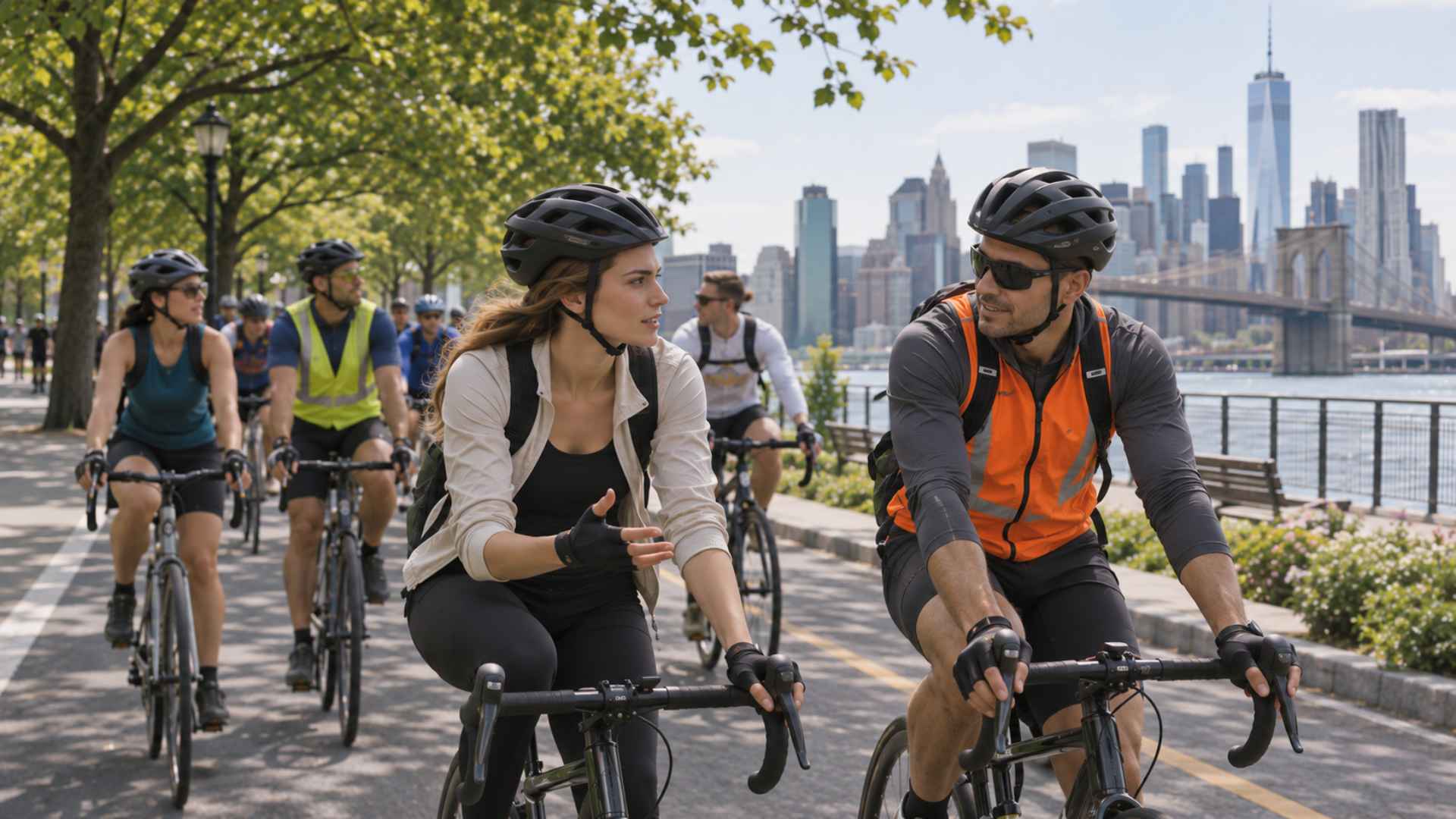
Cycling events in New York range from neighborhood outings to long distance tours that cross several regions of the state. Some are organized as social rides, where participants travel together at a conversational pace. Others follow fixed routes with designated rest stops, volunteer support, and daily mileage targets. These different formats serve different purposes, but they share a practical feature: cyclists can take part in an organized activity without entering a competitive race. The distance, route conditions, and level of support are often more relevant than speed when choosing an event.
New York also offers contrasting environments for group travel by bicycle. Urban routes involve traffic signals, intersections, and dense street networks, while rural tours may involve hills, longer gaps between services, and changing road surfaces. Past statewide tours illustrate the scale that organized recreational cycling can reach. Historical accounts of week long rides in 2005 and 2007 describe routes of approximately 500 miles across New York State with around 200 participating cyclists. Such distances require preparation, but the shared format also creates opportunities for social contact over several consecutive days.
Different Formats of Organized Cycling Events
Large public tours show how recreational cycling can operate outside a racing environment. The TD Five Boro Bike Tour, organized by Bike New York, follows a 40 mile route through New York City’s five boroughs on streets closed to motor traffic for the event. In 2023, approximately 32,000 cyclists participated in its 45th edition. The route is substantial for a casual rider, yet the event emphasizes participation rather than finishing position. Its scale also demonstrates the logistical work involved in securing streets, managing starting waves, providing rest areas, and assisting riders who cannot complete the route.
Multi day bicycle tours follow a different model. Participants ride from one overnight stop to another, often passing through small towns and rural areas. RAGBRAI, the annual recreational ride across Iowa, offers a long running example: it began in 1973, when an estimated 300 people started the inaugural six day journey and 114 completed the entire route. Although the event takes place outside New York, its history illustrates how shared travel can develop into an established cycling tradition. Cross state events typically demand attention to daily distance, lodging, food, mechanical reliability, and recovery between stages.
Community Rides and Local Cycling Culture
Smaller community rides tend to be more regular and less formal. Cycling clubs, neighborhood groups, and nonprofit organizations may schedule weekly routes, beginner sessions, family outings, or rides centered on a particular area. Group descriptions commonly distinguish between relaxed, moderate, and faster paces, although those labels do not have universal definitions. Participants should check the stated average speed, total distance, climbing, and regrouping policy. A ride described as social may still be demanding when the route includes steep hills or long sections without convenient places to stop.
The social value of group cycling comes partly from repeated contact between participants. Riders learn local routes, share practical knowledge about traffic conditions, and become familiar with people who cycle for different reasons. Community events can also connect participants with education and charitable activities. The Five Boro event, for instance, helps support cycling education and outreach operated by Bike New York. Recreational cycling also contributes to physical activity: the World Health Organization recommends adults accumulate 150 to 300 minutes of moderate intensity aerobic activity each week, or 75 to 150 minutes at vigorous intensity, alongside muscle strengthening activity.
Preparation, Road Safety, and Group Etiquette
Choosing a suitable ride begins with the route rather than the event’s popularity. Distance alone does not establish difficulty. Elevation gain, weather, road condition, rest opportunities, and the planned pace all affect the effort required. For a longer tour, cyclists can gradually extend their regular rides and practice consecutive days on the bicycle before departure. Checking tire condition, brakes, drivetrain function, and bike fit is equally practical. Riders should also confirm whether the event provides water, food, mechanical assistance, luggage transport, or a vehicle for participants who need to stop early.
On public roads, group participants must follow applicable traffic laws and the instructions of authorized event personnel. The US National Highway Traffic Safety Administration advises cyclists to use a properly fitting bicycle, maintain working brakes, wear a helmet, and improve visibility with appropriate lights and reflective equipment. During group travel, predictable movements are particularly important. Riders should communicate stops and hazards, avoid sudden changes of direction, and leave enough space to react safely. An organized event does not automatically mean that roads are closed to cars; route details should make that distinction clear.
Long term participation depends on expectations that match the ride’s actual conditions. Published route maps, accurate pace descriptions, accessible meeting points, and clear cancellation procedures help people decide whether an event suits their abilities. Organizers can also make group rides more welcoming by explaining whether stops are frequent, whether slower riders are supported, and what happens after a mechanical problem. For participants, respecting the agreed pace and other road users helps preserve the cooperative atmosphere. Whether the route crosses a city or stretches across the state, community cycling works best when preparation, safety, and shared responsibility receive as much attention as mileage.